The first thing that greets you as you pick up Ali A. Rizvi's The Atheist Muslim: A Journey from Religion to Reason, is the quote by famous evolutionary biologist Richard Dawkins of The God Delusion - "A beautifully written page-turner... One man's epic struggle to climb out of the pit of dogmatic religion into the sunshine of enlightenment. And because the religion concerned was Islam, his success story is the more important for ou troubled times."
I can relate to this "epic struggle", which I saw in my late husband Arshid Malik's life when I met him, fell in love with him, married him despite opposition from our families and with whom I had a stormy marriage of 15 years; before he succumbed to his depression and bipolar disorder (a consequence of untreated trauma of years of incest by a cousin). The combination of destructive internal factors of self-medication, nicotine and liquor and the external factors of mental and physical repression of living in a conflict zone where Islamist forces are hell bent on imposing sharia law while in a proxy war with a secular country took their toll on Arshid. A struggle it definitely was with his identity - politically, religiously, socially and ideological wise, when I met him and was impressed by his open display of it. But then he kept vacillating between belief (to my utmost disbelief to see him reading the Quran and offering prayers) to agnosticism as he started getting introduced to my friend circle on social media and back to atheism again when he realised there was a whole new world out there in the last years of his life.
I recall showing him Ali A. Rizvi's posts and discussing Alishba with him and urging him to add them as friends. He was as fascinated as I had been and would often marvel at Ali's patience with trolls and his epic discussions with Kashif Choudhary MD, a regular debater who often challenged Ali. I learnt a lot from those debates, and how one had to keep one's cool, grow a thick skin, and basically keep sticking to the post and not allow anyone to digress from the main issue being discussed that time. Slowly, I realised my own confidence was growing and the silence which had enveloped me all those decades ago ever since the mind realised the childhood bigotry and later recognised the communal forces that upset the secular lives we had and tried to impose a radical Islam.
It gives me immense pride to start off the blog with Ali A. Rizvi's book. Arshid would have approved. The author's biography reads as follows:
Ali A. Rizvi spent the first twenty-four years of his life as a Pakistani youth growing up in Libya, Saudi Arabia and Pakistan and the next fifteen years as an adult living in Canada and the United States. Rizvi is one of only a handful of nonbelievers from Islamic backgrounds that have openly voiced their views and told their stories without significant risks to their livelihoods. He has been writing extensively about the subject for several years, contributing to The Huffington Post and other major media outlets like CNN.com. In addition to being a writer, Rizvi is a medical communications professional and a trained physician with residency and fellowship training in oncological surgical pathology.
 Inspired by Robert Bruce's 101.books Blog in which he read, reviewed and ranked 101 Modern Books in Western Literature in a space of four years, I figured it would be a way to put other unorthodox views in and about Islam out there. Considering there are very important voices of ex-Muslim, cultural Muslims, and secular Muslims trying to combat extremism in our religion, it would help to keep a comprehensive list of their books in one place.
It also takes inspiration from:
Zindiq is a medieval Islamic term applied by Muslim theologians to "the criminal dissenters" - the professing Muslims who hold beliefs or follow practices contrary to the central dogmas of Islam and are therefore to be regarded as apostates and infidels. I first came across this term "zanadiqa" in Anouar Majid's ''A Call for Heresy: Why Dissent is Vital to Islam and America'', as I was building my sanctuary away from bigotry in 2014, after having survived a flash flood in my hometown and lost my collection of books on this subject. I get a lot of communication from people wanting to know more about dissent, about apostasy, and a general collective frustration about the chokehold that radical Islam and extremists have both on believers and non-believers, Muslims as well as non-Muslims. This is my personal quest about an ideology because of which I have suffered, been judged by and governed for my whole life and continue to face the consequences of having been born into its social matrix.
I start with Ali A. Rizvi's book - The Atheist Muslim, the newest book coming out in the growing "zindiq literature" from Muslims. I will not restrict myself to only Muslims or ex-Muslims, but there are well-researched books by non-Muslims as well that have contributed to this global dialogue about the "clash of civilisations". I pick up Ali A. Rizvi because he was one of the first people I came across as I entered social media, who fascinated me with their views and even the truth of existing in the first place. Coming from a conservative and insulated, bigoted society, it was a thrill to see him articulate secularism, humanism, rationality, and logic and speak as a matter of fact about regressive practices in my religion.
Gradually I became acquainted with Alishba Zarmeen, his very talented and straight-up wife who kept nothing back when calling out hypocrisy and obfuscation among Muslims. I watched as she grappled with trolls and gave them a mouthful with clarity and discovered that there could be women who could stand up to the mullah brigade who relished in putting down women if they had an opinion. Ali's posts brought up Faisal Said Al-Muttar and his views coming from a Middle-Eastern background, yet holding secular, humanistic views were a whole new window into an expanding world of dissent. I have come to know Faisal's book is upcoming and hopefully, I will be able to put it up on the blog soon.
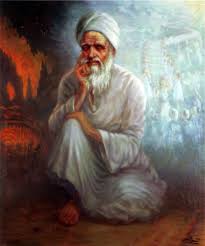
I have no idea how many posts I will dedicate to one book. It will depend on what each author has to say and how relevant it is in today's context. Ayaan Hirsi Ali and Asra Nomani's books are not readily available and I will have to wait until I can order them online. Some like Ibn Khuldun's Muqadimma are easily available but require tough reading and will be put off for some vacation time or a long weekend, as I have a day job to concentrate on too and I am the primary care-giver to a teenager. But I am looking forward to a personal Enlightenment as I peruse these books and make my own list of 101 books in Zindiq Literature.
The books are not going to be strictly non-fiction, though that is the best genre for Zindiq Literature, sometimes fiction is able to communicate universal truths in a far more articulate and forceful way than non-fiction - a case in question To Kill a Mockingbird by Harper Lee, or Roots by Alex Haley, two of the most influential books in American Literature.
Recommendations are welcome.


